
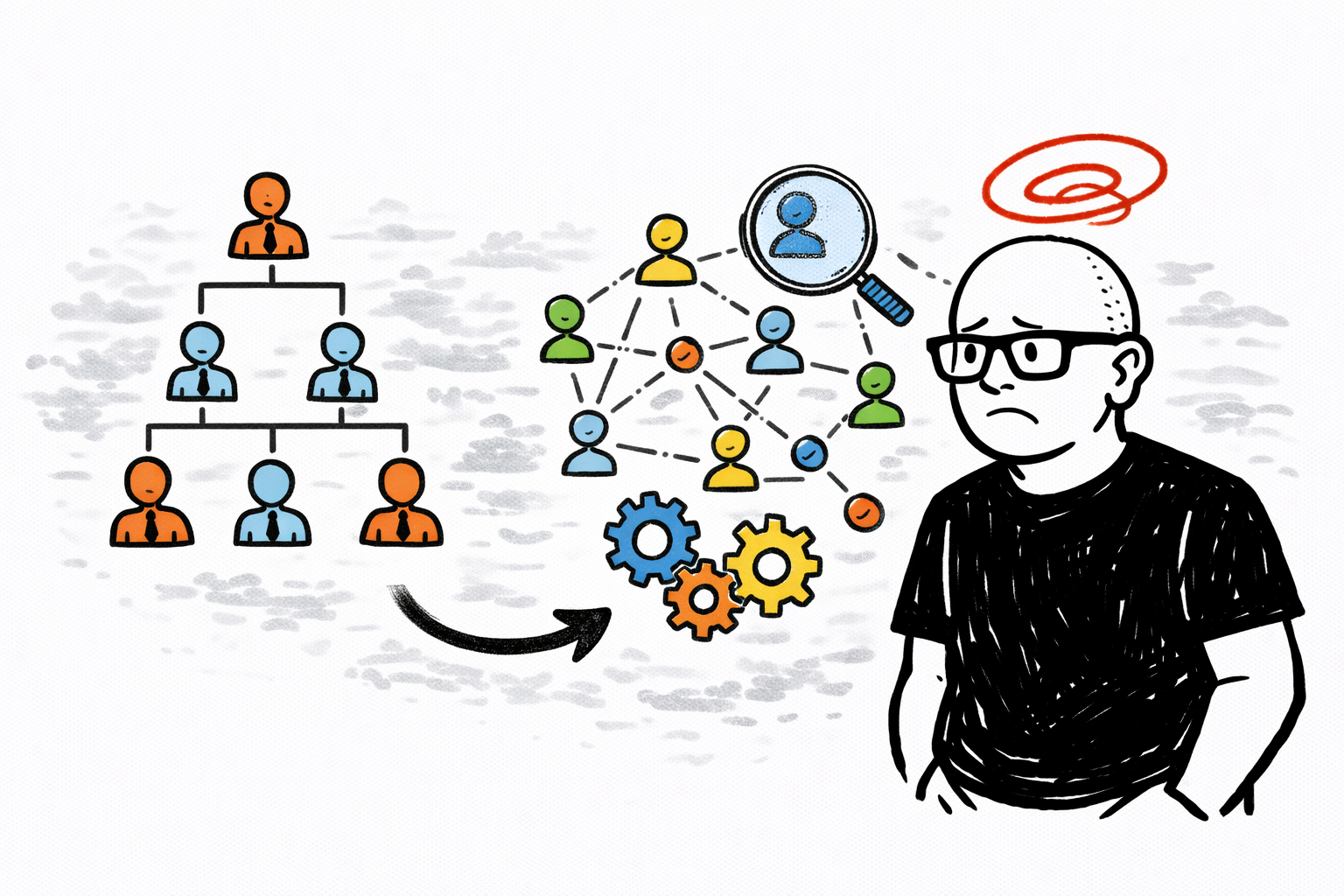
Learning to See Organisations Differently
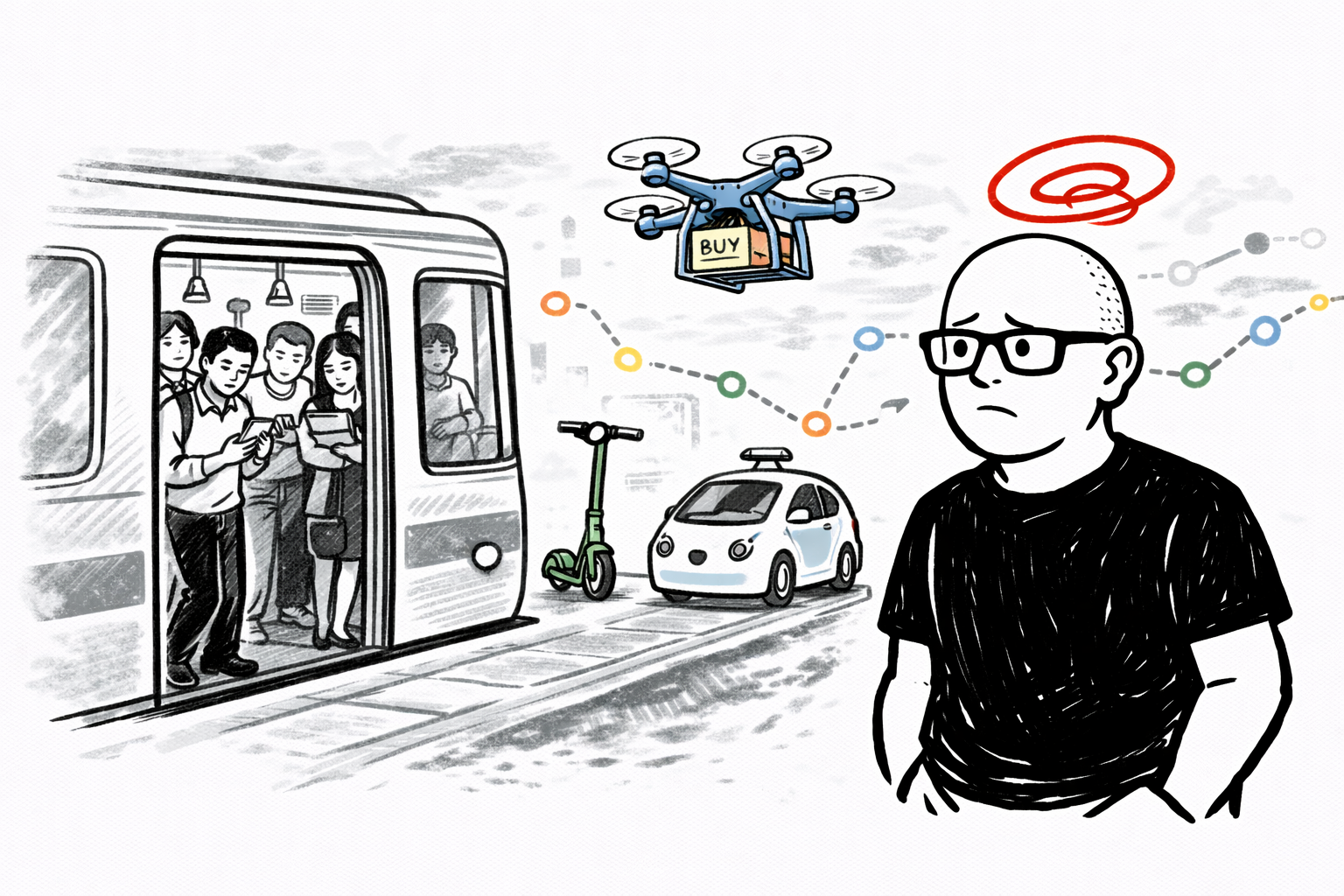
A few years ago, I would never have imagined becoming an ethnographer of the train. But geopolitics has a way of rearranging the mundane. As fuel prices surge, a consequence of unnecessary war in the Middle East and trade wars, all decided in distant corridors of power. The ripple effect has forced me to switch from my car to public transport. From driving the lines, tracing my own routes through the road network insulated in steel and glass, I was thrown in with everyone else. What I found has become curious. A train line is not simply a route through space. It is a line, physical and imagined, entangled with a multitude of lives, intentions, and temporalities. Knotting together and unravelling at each station along the journey. A student boards at one stop, a shift worker departs at the next, and a consultant opens a laptop three stations later. The line gathers and disperses, gathers and disperses. Each node of the collection station, platform, and carriage doors rounds up and orders human packages. People gather, but they do not meet. They are collected. Sorted. Loaded. Pack away. Arriving at the station or stop, bodies pour out in a slow, uniform current, phones in hand, heads bowed. I couldn’t shake the image of workers leaving the machine in Fritz Lang’s Metropolis . The same shuffling gait. The same downcast eyes. But these aren’t labourers broken by industrial discipline. These are knowledge workers, voluntarily tethered. I began to think of the smartphones as umbilical cords. Unnecessary ones at that. These digital entanglements connect each person to hegemonic entities they can barely name or conceive. Big tech, algorithmic processes, AI, data architectures, concepts that don’t enter the mind of the commuter. So who is nourishing whom in this arrangement? The user feels connected, sustained. The platform extracts attention, data, and behavioural surplus. Both parties believe the other is the dependent. And then there were the laptops. People are already working buried in emails, spreadsheets, Slack messages — before they’d arrived at the office. Whatever happened to the Australian ethos of working to live rather than living to work? That sensibility assumed a clean boundary between labour and leisure, between the office and the beach. The smartphone has erased or weakened that line. Work, rest, and distraction occupy the same device, posture, and glazed expressions. You cannot tell from looking whether someone is answering their manager or scrolling memes. The activity is identical. I noticed all of this because I was reading Tim Ingold’s Life of Lines , a physical book, held in two hands, which, of course, is its own technology of insulation. Ingold distinguishes between the wayfarer, who moves attentively through the world, and the transported person, who is essentially a parcel moved from one destination to another. My fellow commuters had gone further. They were being transported through physical space while simultaneously being transported through digital space. Present in neither. Autonomous in neither. The train line, this thing that entangles us all at different points of time and space, had become merely a conduit, its knots of human meeting pulled tight and never opened. The car windscreen has been replaced by the phone screen. The private cabin has been replaced by the digital bubble. The insulation persists. It just changed the substrate. I looked up from my book and saw lines everywhere. The fixed line of the rail corridor. The invisible lines of the wireless signal. The lines of text on every screen. The lines of force run from Washington to fuel pumps to household budgets to train tickets. And the line I was travelling, entangled with a multitude at different points of time and space, knotting and unknotting at every station. We were all following lines. None of us chose quite where they led. Perhaps the most honest thing I can say is this: I am one of the drones, too. I was reading a book about lines while being carried along one, performing a more prestigious version of exactly what everyone else was doing, absent from the shared space, following a thread of my own. The only difference was the moment I looked up. Maybe that’s enough. The ethnographic instinct isn’t immune to the pattern. It’s the willingness to notice you’re in it.
This proposed paper is glance towards future research project and a trend on social media. With the topic of Empathy becoming a hot subject at the moment on social channels such as LinkedIn.