
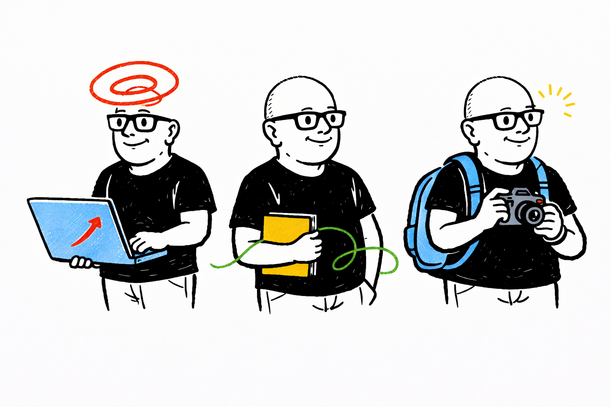
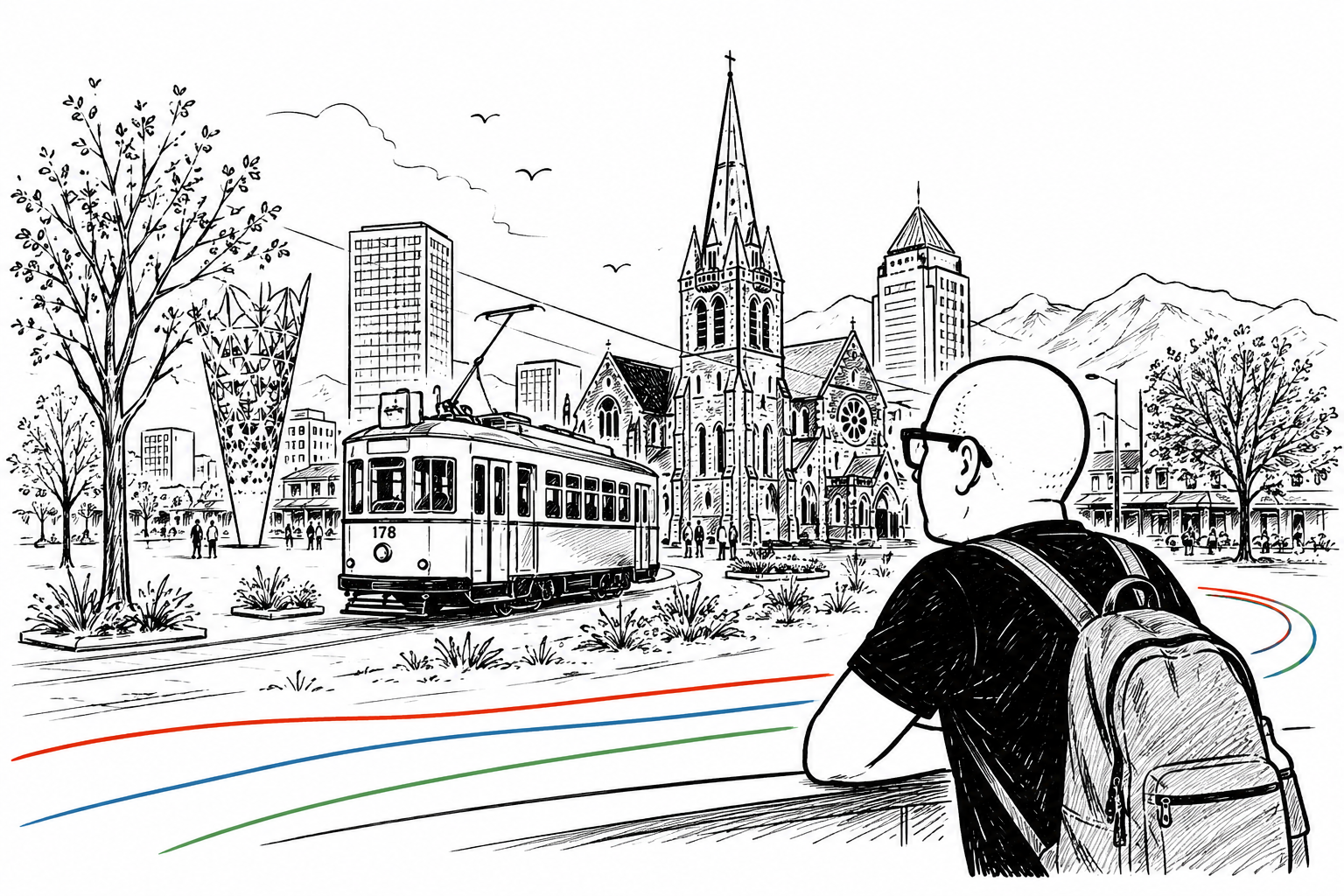
A Reflective Account of Travel, Team Culture and Place The journey commenced even before its official start. A cold Monday morning began in a rush. Launching out of bed to get ready and leave the house on time. I had made sure the bag was packed in the car, camera of course, and the other small rituals of departure were complete. Launching the car into the predawn darkness towards Tullamarine Airport. I slipped into the flow of red taillights heading east on the highway. I expected a direct route, a path I have driven almost every day for the past year. But an accident and roadworks quickly disrupted that plan. I had to detour. Even before reaching the airport, the long journey ahead became something other than a neat line from home to destination. Travel plans on paper often appear straightforward when reduced to an itinerary. Departing Melbourne, arrive in Christchurch. Transfer to the hotel. Attend a team dinner. Go here, do that. However, the lived experience of travel is rarely so linear. Travel is often shaped by pressure, improvisation, traffic, timing, luggage, queues, physical presence, and numerous micro decisions made under constraint. By the time I parked the car, struggled with arms full of luggage, and entered the flow of international departures, the journey had already begun to take its toll on me physically. At that point, Christchurch was still an abstraction. It was just a destination, a work trip, a scheduled experience. Still, I was already moving through a meshwork of roads, airport systems, other travellers, security checks, bags, boarding passes, and the unseen coordination of international travel. These were not separate from the trip. They marked its beginning. Moving through the liminal space of the airport, coffee in hand, I arrived at the departure lounge. Here I met my colleagues to wait for the boarding call, delayed, of course, along with hundreds of other early-morning travellers. The plane lifted off on its long journey, soaring to over 10,000 metres in a minus-60-degree atmosphere. Inside the plane, travellers from their own spaces come together for a new journey. Settled into the flight, I pull out one of the many books I’m currently reading. The bright green cover featuring a photo of a Dingo is this morning's choice. I began reading Deborah Bird Rose’s Dingo Dreaming deliberately slowly. The book does not lend itself to rapid reading; instead, it demands careful absorption. Some texts are easily set aside, while others alter one’s perspective upon looking up from the page. Rose’s work belonged to the latter category. Engaging with her writing between Australia and Aotearoa, New Zealand, shifted my attention prior to arrival. The narrative encouraged a greater openness to relationships among people and place, humans and animals, colonial histories and contemporary lives, movement, and belonging. My mind was already in a state of contemplation and reflection. That may be why the first night stayed with me for some time. Walking to dinner, I met a local Māori man living rough on the street. He said hello in a rough voice as I passed. I stopped to respond, say hello and make a comment about the cold. “What’s your accent?” came the reply. I’ve never been asked that question; something to ponder another time. What began as a quick exchange became a fifteen or twenty-minute conversation. I’ve read many anthropological accounts of works on working with the homeless and have conducted previous research in Melbourne. First things first, I asked him his name. Human-to-human sharing of names. He went on to tell me about his navy service, visiting Melbourne, leaving the defence force, and then wandering in New Zealand. Christchurch had become his place. His circumstances were harsh. Still, he spoke of freedom, doing his own thing, and a self-possession that resisted easy interpretation. We shook hands. I walked into dinner, wondering when he had last had a decent meal. That encounter did not diminish the trip; rather, it altered my experience of it. It introduced complexity alongside enjoyment. It also revealed all the other rough sleepers hiding in doorways or openly pushing carts full of their belongings. Perhaps this is how places become authentic. Not solely through celebration or critique, but through their uneasy coexistence. I was present for a work trip, en route to a restaurant with colleagues. He navigated a different trajectory through the same city, shaped by military service, wandering, hardship, place-making, and survival. For a brief period, our paths entangled before diverging once more. With that encounter in mind, the next day marked the start of the formal experience. The group was divided into smaller teams and sent into the city on a scavenger hunt. Each group had four or five people. We moved through Christchurch on the historic tram or on foot, following clues, solving puzzles, filming, taking photos, and visiting locations. Talking and planning as we moved through the city. After a few hours, we all converged on the Christchurch Botanic Gardens. The activity was competitive, but in a playful way. It was also a practical collaboration. People had to interpret clues, decide where to go, frame photos, capture video, keep moving, and make group decisions. This was not collaboration as an abstract value, but as a dynamic process enacted through movement. Ingold’s idea of the meshwork helps with understanding the dynamics. The city was more than just a backdrop for a corporate activity. It became part of the activity itself. The autumn trees and their falling leaves, the wet pavement, tramlines, walking routes, clues, cameras, phones, streets, gardens, time pressure, and group dynamics all tangled together. We weren’t simply moving through Christchurch. We were learning from each other and the space as we moved through it. The organisers assembled the experience. That matters. Power did not disappear. Someone designed the itinerary, wrote or chose the clues, divided the groups, set the rules, picked the reward, and set the meeting point. This was a structured experience, not spontaneous wandering. But once the groups were in the city, power changed form. It spread out. It shifted from formal hierarchy to situated capability. Practical authority belonged, for a time, to whoever could read a clue, spot a landmark, navigate the tram, use the camera, set the pace, spark action, or make a decision during uncertainty. Power had become dynamic, empowering individuals and the collective. That dynamic was one of the most interesting things about the day. The organisers kept framing power. Inside that frame, authority was mobile. For a day, hierarchy loosened. Rank didn’t disappear, organisational roles never vanish, but their usual force is diluted. People could be seen, and see, differently. Someone quiet might notice details others missed. Someone junior might become a navigator. Someone peripheral at meetings could drive group progress. It may reveal a leader who can not let go, anything is impossible in this dynamic space. Leadership was not a title here. It emerged through relation, movement, and need. This is significant to note because culture developed not through formal alignment, but through the temporary distribution of power, attention, and trust. The botanical gardens became the first point where the day started to change register. Until then, we had been moving through the city with purpose: reading clues, finding locations, taking photographs, filming, competing and trying to arrive on time. The shift happened as the gardens slowed that movement as we wandered across manicured lawns. Though they were still part of the curated experience, they opened the day toward something less instrumental. Trees, paths, lawns, river edges and planted order gave the group a different kind of pause, unless running from an emergent sprinkler. We were still in the activity, but the city had begun to soften around us. It was becoming part of us, and us with it. Leaving the lush European garden, the group headed through the suburbs to the city's outskirts. Shifting the experience again. If the gardens offered nature as civic order, the Gondola ride ahead offered nature as scale. We travelled from the curated beauty of the botanical gardens, through the suburbs and industrial zones, toward the wild and ancient crater rim. Here, the landscape could not be neatly contained within the activity's frame. We loaded into the small enclosed cabins of the Gondola and started the steep ascent over volcanic rock, grazing sheep, and slow-growing moss. Arriving at the top, we are greeted by the icy wind. Quickly heading into the warmth of the visitor centre. We had lunch together, discussed the scavenger hunt and enjoyed the scenery. Not every part of culture-building needs activity or competition. Some of it comes during a pause. Here at the crater rim, the group was no longer solving clues or chasing a prize. We were there, exposed together in that space and time. After lunch, we stepped outside to walk around through the serrated tussock grass and past the tall flower spikes of the flax grasses. From here, we could look down on the city below, the coastline in one direction, the Alps in the distance, and the harbour on the other side of the rim. The wind was almost cold enough to feel in the bones. The wind did not simply accompany the experience. It helped shape it. The city, the coastline and the harbour in the distance below us. I know what we saw no one else will see again. The space and time have moved on. This was no longer about clues or competition. It was about standing together in the cold at that moment, in space and time, in awe of the view. A unique connection arises from sharing exposure to the weather. This differs markedly from interactions in meetings or presentations. Physical experience becomes integral to memory. The view, altitude, cold, movement of jackets, hair blown by the wind, squinting, and adjusting posture are all essential elements that render the experience enduring. Christchurch itself was not a neutral setting. It was a city still rebuilding after devastation. Empty lots from demolished buildings were still being refilled with new architecture. The city carried the visible signs of rupture and repair. It was not frozen in its earthquake history, but neither had that history disappeared. There existed a sense of rebuilding still underway, of a place being remade while people continued to live, work, visit and move through it. That made it an interesting city for a team experience. We were there, participating in a curated exercise in connection. Around us, the city underwent its own process of reconstruction. The itinerary moved through an urban landscape marked by loss, renewal, colonial inheritance, and civic repair. The botanical gardens contributed an additional dimension. Their beauty was accompanied by a sense of imported familiarity; the European-inspired design could have been found in the United Kingdom. This familiarity contributed to their aesthetic appeal, but also carried colonial implications. The gardens referenced practices of planting, ordering, classifying, and replicating landscapes from elsewhere. Thus, they served as more than a pleasant meeting point; they embodied a longer history of how settler societies render places comprehensible. Then there were the Canadian geese. Not native, yet present. I watched them flying past at head height and skimming across the surface of the Avon River, crystal clear and obviously freezing. They were beautiful and slightly out of place, though perhaps “out of place” is too simple. They were part of the city’s present ecology, part of what the river now held. Their movement through the air and water added another line to the day: more-than-human, introduced, graceful, unsettling. There was also an evident Māori presence embedded in the city’s public life. Māori names, forms, artworks, carvings, and symbolic markers appeared alongside colonial architecture, gardens, tramlines, and civic spaces. They were not separate from the city’s surface, but interlaced with it. This was striking to me because, in Australia, this kind of coexistence remains still often being awkwardly and unevenly attempted; the ancient and the new are placed side by side, but not always allowed to change how the place is understood. In Christchurch, at least to an outsider passing through briefly, Māori culture seemed more visibly present in public meaning-making. That visibility did not resolve the tensions of colonial history, nor did it erase inequality. In fact, it sharpened another uncomfortable observation: many of the rough sleepers I noticed in the city appeared to be of Māori heritage. That belongs to another reflection, but it stayed with me as part of the same layered place. These details helped define Christchurch as a layered place of becoming. The historic tram, the gardens, the rebuilding city, the river, the geese, the Māori man I had met the night before, the corporate groups moving through clues and photographs. Each belonged to a different line of the place. None cancelled the others. Together, they made the city more than a setting. From the Gondola, we came back down and took an Uber to an indoor go-karting centre. The day shifted again. The scenic and reflective gave way to speed, noise and competition. We were split into two groups. The fastest lap times from each group determined the order and groupings for the second race. The contest was fierce in a fun way. The go-karting worked differently from the scavenger hunt. It was less interpretive and more bodily. The track produced its own temporary hierarchy, measured in lap times rather than job titles. People became fast, cautious, aggressive, strategic, surprised, frustrated, and amused. The body was again central, but now through acceleration, cornering, impact, concentration and adrenaline. This dynamic was also valuable. When managed appropriately, competition can alleviate the usual seriousness of work. It provides individuals with opportunities to test themselves and one another without the pressure of workplace performance. Status can be redistributed playfully. A senior colleague may be slower on the track, while a quieter individual may demonstrate unexpected speed. Competitive tendencies may become more apparent. These experiences generate narratives that contribute meaningfully to group culture. By the end of that day, the experience had entered the body. We had walked, climbed, stood in cold wind, raced, laughed, competed and moved across the city in multiple ways. The body remembers these things before the mind organises them into meaning. That night we went out for dinner at an Irish-style tavern in the city. Meals have their own cultural work to do. They allow the day to be retold. The scavenger hunt, the Gondola, the wind, the lap times, the near misses, and the small embarrassments could be turned into a common narrative. This is often how group experiences settle. Not in the activity itself, but in the telling afterwards. The next day, we went to the local office. Work returned, but not abruptly. We focused on cooperative projects, caught up with emails and did some of the ordinary tasks that do not disappear simply because people are away. We had a quick lunch, then headed back to the airport. By then, the trip had changed register. The major activities were done. The competitive pressure had passed. The group was no longer moving toward the next event. We were moving home. That made the airport one of the most enjoyable parts of the trip. Christchurch Airport was easy. We moved quickly through check-in, through duty-free and into the gate lounge. There was a relaxed quality to that waiting. Work was not at the front of mind. We were tired. Our bodies ached from the day before. The pressure had lifted. During that suspended time at the airport, the group sat in the sun, the light streaming through the windows, together without needing to perform the next task. Airports function as liminal spaces, holding individuals between destinations. Travellers are neither fully present in the place they have visited nor yet returned home. Following a structured trip, this transitional period can acquire unexpected significance. It offers time for decompression before resuming ordinary routines. Although not formally part of the team-building activity, this interval may be where the experience attains its most human dimension. Arriving in Melbourne was also easier than expected. Customs were easy. The path through the airport was smooth. Afterwards came the luggage carousel. The luggage carousel is the great leveller. It does not matter where anyone sat on the plane, what title they carry, how important their next appointment is, or how quickly they want to leave. Everyone stands there, watching for their bag. After all the movement, all the competition, all the curated activity and all the lines of travel, the carousel imposed its own slow rhythm. The system controlled the time. Everyone waited. That moment appeared strangely fitting. The trip had redistributed power in various ways: through the scavenger hunt, through the city, through the Gondola, through go-kart lap times, through weather, and via fatigue. At the carousel, power was redistributed again through delay. No one could hurry it. No one could manage their way around it. Then my bag arrived. I walked out and straight onto the airport car park bus. Back to the car. Back onto familiar roads. Back home. At home, there was a very excited dog, my wife and my own bed. That return matters. The trip began with the pressure of leaving and ended with the still recognition of home. The dog’s excitement was not separate from the story. It completed the line. After all the movement through roads, airports, cities, rivers, gardens, offices, restaurants, tracks and terminals, I returned to the ordinary intimacy of being recognised by an animal that had no interest in itineraries, lap times or corporate purpose. Looking back, the Christchurch trip was valuable because it was more than a work trip. It was a temporary meshwork of movement, place, power, culture, weather, competition, reflection and return. The organisers curated an experience that enabled collaboration outside the ordinary structures of work. They created the conditions, but the meaning emerged through movement: through the tram, the clues, the city, the cold wind, the shared dinners, the racing, the waiting and the aching body. The experience was positive, yet not superficial. There were complexities: the man living rough, the colonial legacies of the gardens, the presence of introduced geese, the visible earthquake scars, and the uneven experiences within a city that holds different meanings for its inhabitants. However, these complexities do not diminish the positive aspects; rather, they provide depth. They demonstrate that connection is never abstract, but always situated among histories, bodies, landscapes, infrastructures, and ongoing lives. Perhaps that is what I took most from the trip. Culture is not built through declarations. It is built through common lines of experience. Moving together, waiting together, solving together, laughing together, competing together, feeling cold together, feeling tired together, and returning together. For a few days in Christchurch, those lines crossed. Moreover, in their crossing, something of the group became more visible.
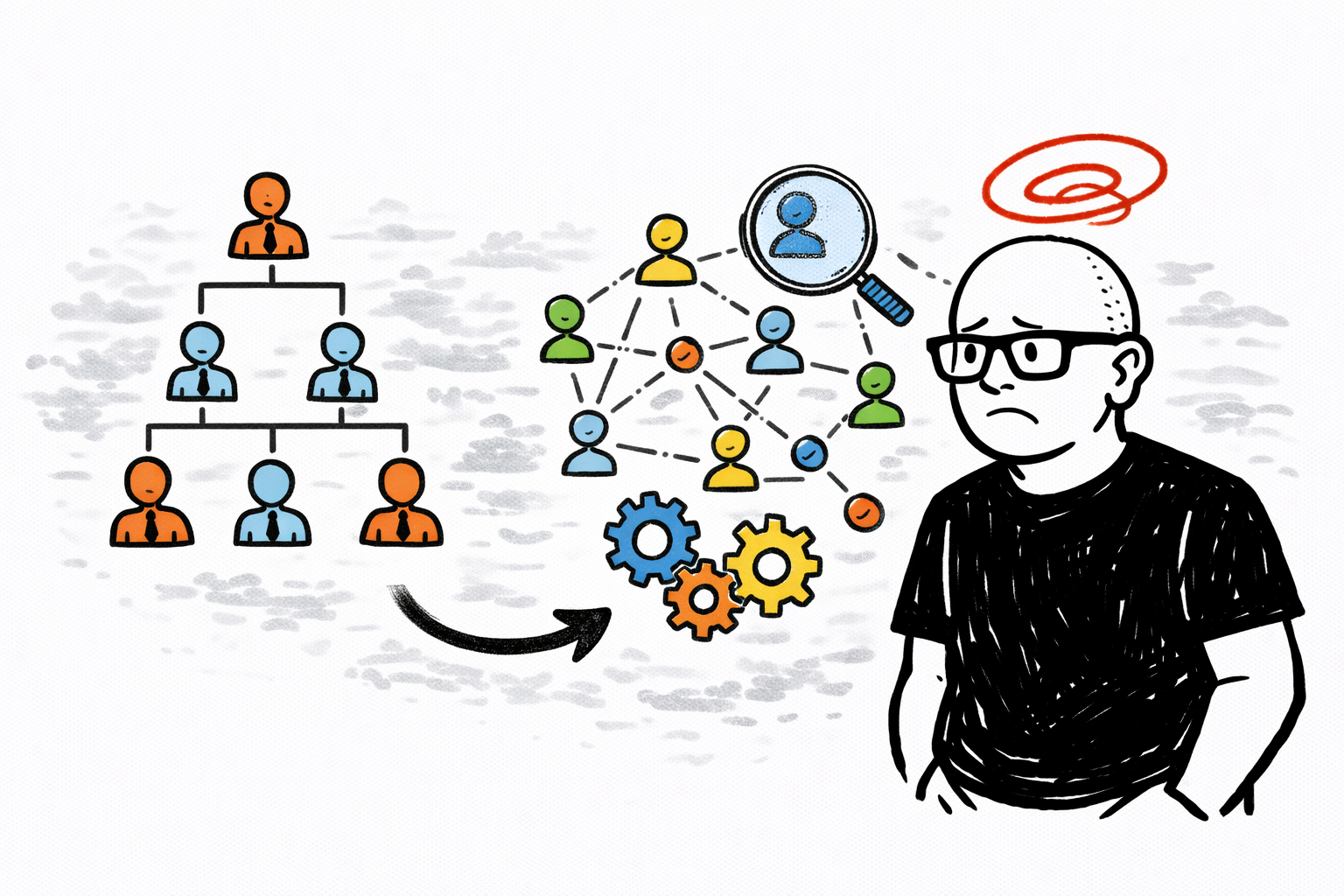
Learning to See Organisations Differently
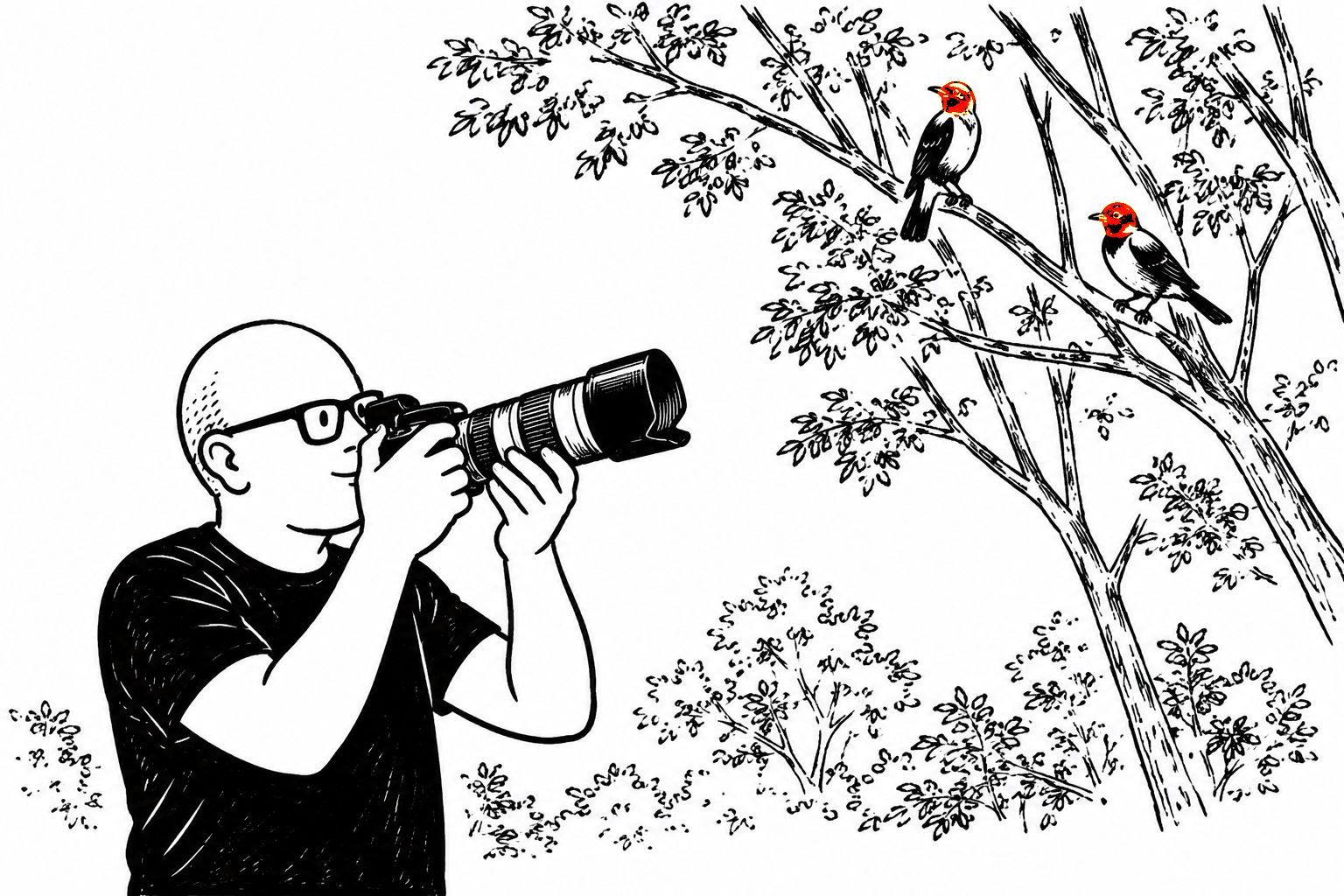
I cannot remember the name of the small eucalyptus purchased on sale from Bunnings. That seems important now, though it mattered less when I planted it. At the time, it was a small tree placed in the far corner of the garden with a fairly simple intention. I wanted to feed the New Holland honeyeaters that regularly moved through the yard. They were already part of the garden’s rhythm, arriving in quick bursts, calling sharply, disappearing again into the shrubs and fences and neighbouring trees. Planting the eucalyptus felt like a small act of welcome. A gesture of provision. Ten years later, the tree is about five metres tall and covered in small pink flowers. It has become something other than what I imagined. The New Holland honeyeaters do visit it. In that sense, the plan worked. But the tree was never only theirs. Wattlebirds arrive with their rougher, more assertive presence. Other honeyeaters come through too, drawn by nectar and movement. Superb fairy-wrens dart in and out of the lower branches, not for the flowers exactly, but for the insects that the flowers attract. In the evening, a ringtail possum and its joeys visit the tree, moving through it with a different tempo altogether. Occasionally, a grey-headed flying fox arrives from the new local colony, an animal not always welcomed by nearby fruit growers, but here, in this garden, it appears as part of the same wider set of relations. It is welcome here. The tree has become a meeting point. Not a symbolic one only, but a practical one. A place where nectar, insects, shelter, shade, habit, hunger and timing gather together. What began as a planted object has become a small ecological field. Its meaning is not held in the tree alone, but in the relations that form around it. The tree is not simply “in” the garden. It is helping make the garden into a different kind of place. The tree has also changed how the garden sounds. In the afternoons, corellas, galahs and cockatoos pass overhead, sometimes unseen at first, announced by their calls before their bodies appear above the roofline. Their sound belongs to the wider suburb rather than only to the backyard. It comes from above, across fences, roads, powerlines and the remnant trees that still hold the memory of a much larger habitat. Their calls are not background noise. They are a reminder that the garden sits inside a larger aerial world, one that birds read and use in ways I can only partly understand. Closer in, the rainbow lorikeets arrive with less subtlety. They are bossy, bright and possessive, turning the flowering tree into a noisy argument over nectar. They do not simply feed. They claim, chase, scold and return. Their colour almost feels too vivid for the garden's muted greens and greys, yet they belong completely to it. The eastern and crimson rosellas are different. They feel more delicate, more occasional. I mostly see them when the tree is in flower, as if the pink blossoms briefly open a door through which they re-enter the backyard. The hammock sits close to the lemon tree, so the garden is not only eucalyptus blossom and bird movement. There is citrus in the air too, especially when the leaves are brushed or the weather is warm. The smell is sharp, clean and slightly oily, mixing with the softer scent of flowering gum, damp soil, dry mulch and the faint sweetness of nectar. After rain, the garden smells heavier. The eucalyptus leaves release that familiar resinous scent, while the lemon tree cuts through it with something brighter. It is a smell of domestic care and wild visitation at once. From the hammock, the backyard is never silent. There is the high chatter of honeyeaters, the scratch and shuffle of small birds in the foliage, the sudden wingbeat of lorikeets arriving too fast, the rasp of wattlebirds, the thin contact calls of fairy-wrens, and the overhead clamour of parrots moving through the afternoon. The ding-ding of a crimson rosella in another nearby tree. My attempts to mimic the sound are met with a harsh chatter. In the evening, the sound changes again. The birds withdraw. Possums begin their quieter work in the branches. Leaves move without wind. The garden becomes less visual and more textural. I wander to the corner with my torch to say hello to the possumn and to curse it eating my roses as well, but it is welcome in this tree. This is where the anthropological view becomes useful. It asks me not to see the backyard as a private domestic space occupied by a few visiting animals, but as a shared and negotiated environment. The animals are not decorations added to human life. They are participants in the making of place. They arrive with their own needs, patterns and risks. They move through fences, property lines and human intentions without much concern for the categories we place around them. The backyard, then, is not only a garden. It is a habitat, corridor, feeding site, refuge, territory and threshold. Sitting in the hammock beneath the flowering eucalyptus, close to the lemon leaves, close to the birdbath, I become aware that care is often less grand than we imagine. It is not always rescue, intervention or expertise. Sometimes it is water in the birdbath, filled daily. Sometimes it is planting for a flower that will open in another season. Sometimes it is learning to sit still long enough to notice who comes, when they come, and what they do once they arrive. The first tree was planted for a single species, but it has taught me to think beyond that single-species intention. The New Holland honeyeaters were the beginning of the relationship, not its limit. The tree has drawn me into a wider multispecies awareness, where care becomes less about choosing one animal to help and more about creating conditions in which many forms of life can pass through, feed, shelter, rest and return. There is also a lesson in time. Ten years is a long time in the life of a garden, but not such a long time in the life of a tree. The eucalyptus has grown slowly into significance. Its current flowering is not just a seasonal event, but the result of a decade of waiting, weather, soil, roots and repeated visits. The garden remembers through growth. Relationships take shape through recurrence. The birds know the tree now. The possums know it. The insects know it. The flying foxes may know it only occasionally, but even that occasional visit matters. I sit beneath it and think about what it means to share an urban space with animals whose lives are often made difficult by the very environments we have built. A backyard cannot undo habitat loss. A flowering tree cannot resolve the conflicts between flying foxes and fruit growers, or between urban expansion and the animals displaced by it. But it can still matter. It can become part of a patchwork of small refuges, minor corridors and everyday acts of repair. The garden is not peaceful in the simple sense. It is busy, contested, scented, noisy and alive. The lorikeets argue. The honeyeaters negotiate access. The fairy-wrens hunt through the insects. The rosellas appear and disappear with the flowering. The possums come at dusk. The flying fox arrives from a colony that some people would rather not have nearby. The lemon tree perfumes the air beside me while the eucalyptus feeds animals above me. So I have planted another flowering eucalyptus. This one will flower at a different time of year. That feels like a small adjustment in the rhythm of care. Not just more planting, but more attention to timing. More attention to the gaps between seasons. More attention to who might be hungry when one tree has finished, and another has not yet begun. Perhaps that is what the first tree has taught me. Caring for backyard animals is not about imagining myself as the centre of their world. It is to become more attentive to the world's already unfolding around me. It is to plant, watch, refill, wait and learn. The far corner of the garden is no longer far away. It has become one of the places where relationships happen.
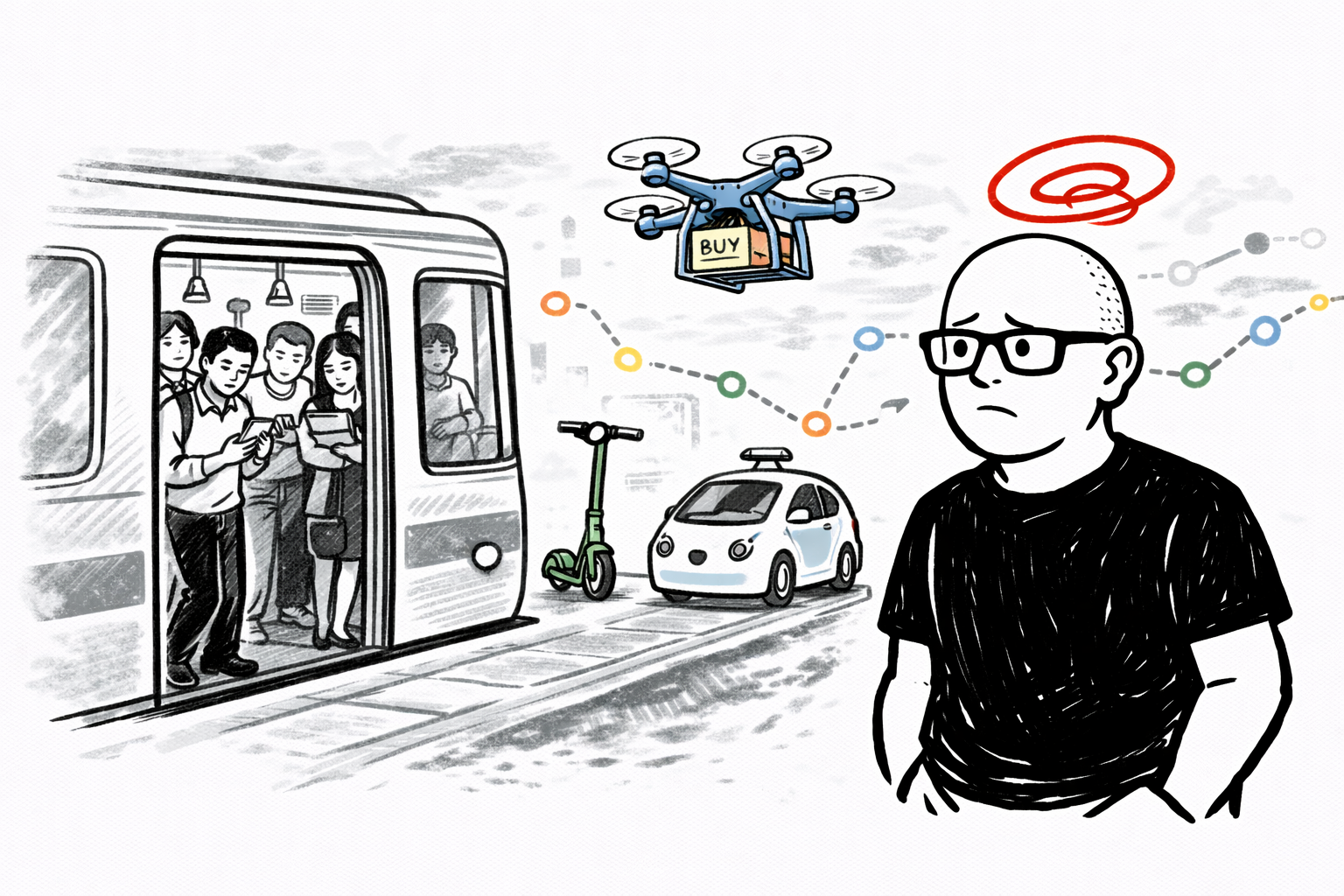
A few years ago, I would never have imagined becoming an ethnographer of the train. But geopolitics has a way of rearranging the mundane. As fuel prices surge, a consequence of unnecessary war in the Middle East and trade wars, all decided in distant corridors of power. The ripple effect has forced me to switch from my car to public transport. From driving the lines, tracing my own routes through the road network insulated in steel and glass, I was thrown in with everyone else. What I found has become curious. A train line is not simply a route through space. It is a line, physical and imagined, entangled with a multitude of lives, intentions, and temporalities. Knotting together and unravelling at each station along the journey. A student boards at one stop, a shift worker departs at the next, and a consultant opens a laptop three stations later. The line gathers and disperses, gathers and disperses. Each node of the collection station, platform, and carriage doors rounds up and orders human packages. People gather, but they do not meet. They are collected. Sorted. Loaded. Pack away. Arriving at the station or stop, bodies pour out in a slow, uniform current, phones in hand, heads bowed. I couldn’t shake the image of workers leaving the machine in Fritz Lang’s Metropolis . The same shuffling gait. The same downcast eyes. But these aren’t labourers broken by industrial discipline. These are knowledge workers, voluntarily tethered. I began to think of the smartphones as umbilical cords. Unnecessary ones at that. These digital entanglements connect each person to hegemonic entities they can barely name or conceive. Big tech, algorithmic processes, AI, data architectures, concepts that don’t enter the mind of the commuter. So who is nourishing whom in this arrangement? The user feels connected, sustained. The platform extracts attention, data, and behavioural surplus. Both parties believe the other is the dependent. And then there were the laptops. People are already working buried in emails, spreadsheets, Slack messages — before they’d arrived at the office. Whatever happened to the Australian ethos of working to live rather than living to work? That sensibility assumed a clean boundary between labour and leisure, between the office and the beach. The smartphone has erased or weakened that line. Work, rest, and distraction occupy the same device, posture, and glazed expressions. You cannot tell from looking whether someone is answering their manager or scrolling memes. The activity is identical. I noticed all of this because I was reading Tim Ingold’s Life of Lines , a physical book, held in two hands, which, of course, is its own technology of insulation. Ingold distinguishes between the wayfarer, who moves attentively through the world, and the transported person, who is essentially a parcel moved from one destination to another. My fellow commuters had gone further. They were being transported through physical space while simultaneously being transported through digital space. Present in neither. Autonomous in neither. The train line, this thing that entangles us all at different points of time and space, had become merely a conduit, its knots of human meeting pulled tight and never opened. The car windscreen has been replaced by the phone screen. The private cabin has been replaced by the digital bubble. The insulation persists. It just changed the substrate. I looked up from my book and saw lines everywhere. The fixed line of the rail corridor. The invisible lines of the wireless signal. The lines of text on every screen. The lines of force run from Washington to fuel pumps to household budgets to train tickets. And the line I was travelling, entangled with a multitude at different points of time and space, knotting and unknotting at every station. We were all following lines. None of us chose quite where they led. Perhaps the most honest thing I can say is this: I am one of the drones, too. I was reading a book about lines while being carried along one, performing a more prestigious version of exactly what everyone else was doing, absent from the shared space, following a thread of my own. The only difference was the moment I looked up. Maybe that’s enough. The ethnographic instinct isn’t immune to the pattern. It’s the willingness to notice you’re in it.